
A multi-tenant ERP for three cutting-tool manufacturers Zoho could not hold.
Three cutting-tool manufacturers in Mumbai outgrew Zoho. We built CFX, a custom multi-tenant ERP on AWS with a dedicated Android sales app and Gemini AI integration.

Daily kitchen operations, contributions, expenses, and inventory in one application. A community kitchen that runs every day, now running on a structured operating system.
Faiz Ul Mawaid Il Burhaniyah, known to the community as FMB, is a community kitchen that prepares and serves meals every day to families in the Dawoodi Bohra community. The operation runs on volunteer coordination, on community contributions, and on the patient, daily work of producing and distributing food at scale.
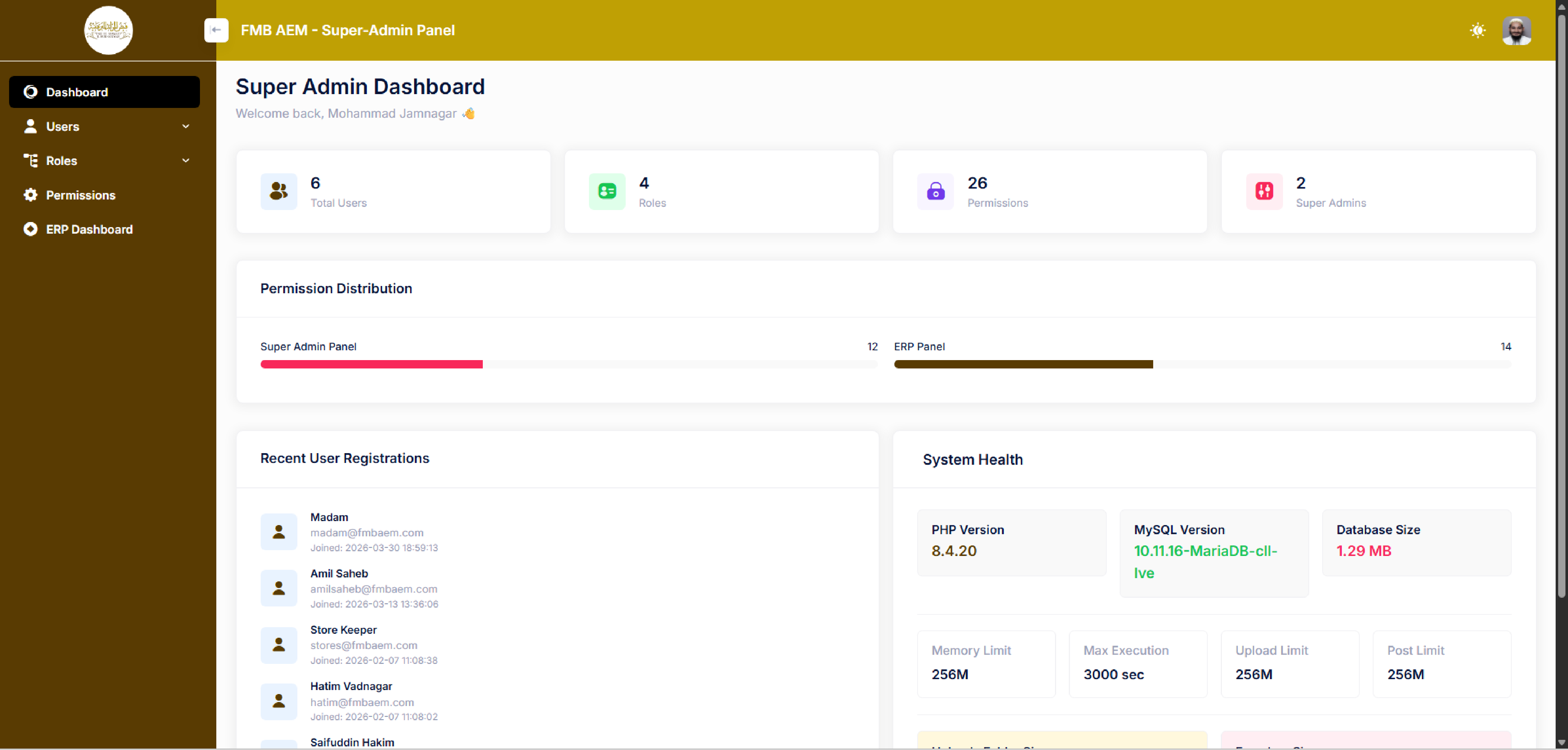
Simply Five Studio built the internal application that handles the operational backbone of the kitchen: who contributes, what is being spent, what is in inventory, and how the daily kitchen workflow is managed.
A community kitchen running every day operates at a tempo that does not forgive operational confusion. Meals need to be planned, ingredients need to be on hand, contributions need to be collected and acknowledged, expenses need to be tracked, and the financial picture needs to remain clear to the trustees and the contributing families.
Before the system, the kitchen ran on paper records, spreadsheets, and the knowledge of the small number of people coordinating each day. As the operation grew, the coordination cost grew with it. The risk of an error in inventory planning, an unrecorded expense, or a mis-counted contribution became material.
The brief was practical: capture the daily kitchen workflow in a system, give the trustees continuous financial visibility, and free up the coordinators' time for the work the kitchen exists to do.
A focused internal application that handles the four operational concerns of the kitchen.
Families and donors contribute to support the kitchen's daily operation. The system manages contribution structures, sends invoices on the agreed cadence, tracks payment, and issues receipts automatically. Acknowledgement of contributions, which matters for both the relationship and the governance, is no longer dependent on someone remembering to send it.
The daily kitchen workflow: meal planning, ingredient requirements, volunteer assignment, and execution. Coordinators can see what is being prepared, who is involved, and what needs to be in place. The day's plan is visible to everyone who needs to see it.
Every expense the kitchen incurs is captured in the system. Bulk ingredient purchases, transport, gas, packaging, and the small running costs that add up over a month all sit in one place. The expense record links to the day, the meal, and the supplier where relevant.
The kitchen carries a working inventory of ingredients. The system tracks what is on hand, what is being consumed, and what needs to be purchased. Over-purchase and stock-out, both expensive in different ways, become visible before they happen.
The day begins with the planned meals visible inside the system. The ingredient requirements are calculated from the meal plans. The coordinator can see whether the inventory covers the day or whether a purchase is needed. Volunteers are assigned to roles.
During the day, expenses are captured as they happen. By evening, the day's financial picture is closed. Contributions received that day are recorded against the relevant donors. Receipts go out.
Over a month, the trustees see a clear picture of the kitchen's financial health. The contribution flow, the expense pattern, and the operational tempo all roll up into a dashboard they can review confidently. Where adjustments are needed, the data supports them. Where the operation is running well, the data confirms it.
The kitchen coordinators recovered the time they had been spending on operational coordination. That time goes into the actual work of running the kitchen, which matters because the work is daily and demanding.
The trustees have continuous financial visibility. Conversations about the kitchen's health are now grounded in data rather than in recollection or estimate. The governance benefits are significant for an institution that depends on community trust.
Donors and contributing families experience a more professional acknowledgement of their support. Receipts arrive when expected. Reminders, when due, are appropriate. The relationship between the kitchen and the community that sustains it is structurally supported by the system.
The system continues to evolve alongside the kitchen's operational needs. New modules are added when the kitchen's leadership identifies a new operational concern that would benefit from being captured. The partnership rhythm allows incremental change without disruption to the daily work the kitchen does.
Three cutting-tool manufacturers in Mumbai outgrew Zoho. We built CFX, a custom multi-tenant ERP on AWS with a dedicated Android sales app and Gemini AI integration.
Evrnest Vista Associate sells property for Chennai developers and Danube Properties, Dubai. We built the system the desk and the field run on: leads from Meta ads and walk-ins, two books of inventory, developer mandates, WhatsApp, a calendar, and a bilingual public site that turns a saved property into a lead.
Lucky Traders counted their godown on paper. We built a Tauri app for Windows and Android that gives every bag of fasteners its own QR sticker, scans it out with nothing to type, keeps working without a signal, and hears the barcode gun even while Tally is on screen.
Engagements begin with a conversation. Not a pitch. A direct discussion about your operations and the visibility you are missing.